
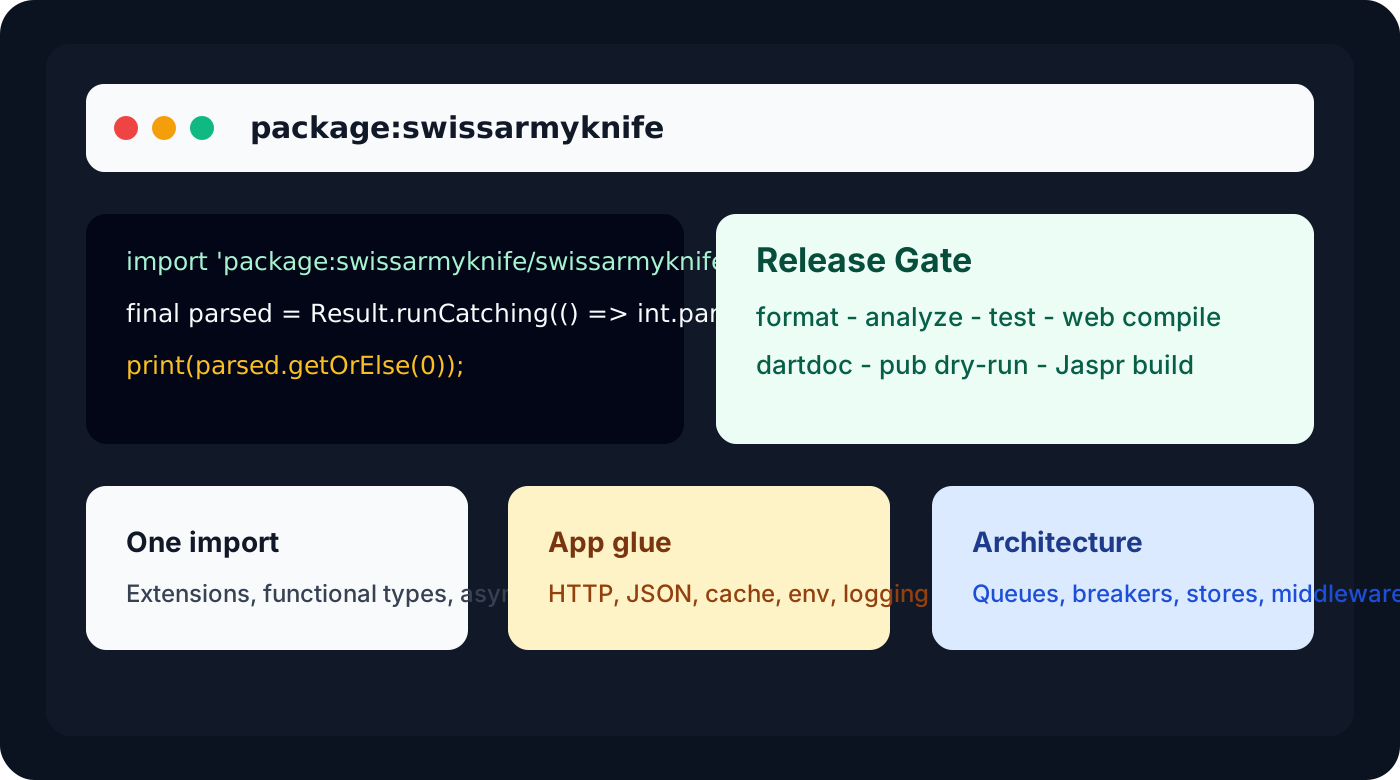
SwissArmyKnife is the utility layer you reach for when application code starts collecting local helpers. It keeps the surface broad, typed, and tested while staying behind a single import.
v0.1.0 is guarded by formatting, static analysis, the full test suite, web
compilation, dartdoc generation, pub dry-run, and this Jaspr site build.
import 'package:swissarmyknife/swissarmyknife.dart';

final parsed = Result.runCatching(() => int.parse('42'));
final email = Validator<String>.email().validate('team@example.com');
final name = {'user': {'name': 'Ada'}}.at('user.name').asStringOr('Unknown');
The Shape#
| Layer | What it gives you |
|---|---|
| Extensions | Strings, collections, maps, numbers, dates, futures, streams, URIs, regex, bytes, nullable values |
| Control flow | Result, Option, Either, tuples, sync and async pipelines |
| Coordination | Retry, debounce, throttle, rate limits, task queues, circuit breakers |
| App glue | Validation, HTTP, API clients, safe JSON, schema validation, cache, env, logging |
| Architecture | State machines, commands, event bus, lazy values, reactive store, middleware |
Release Posture#
The package is intentionally conservative about claims. Platform support is
checked by compile gates, not prose. Pub packaging is checked with a dry-run.
Releases are tagged as v<version> from the verified commit.
Start#
Install from pub.dev:
dependencies:
  swissarmyknife: ^0.1.0
Then read Getting Started, scan the API Guide, and keep the Cookbook nearby for common patterns.